
Understanding the Texas Mini-TCPA Law: What You Need to Know
The Texas Mini-TCPA Law now applies not only to phone calls but also to text messages, and if your business sends marketing SMS/text messages to Texas residents, you may be required to take specific actions to comply. This article outlines what the law means for your business, how it affects you, and the steps you need to take
What’s Changing with the Texas Mini-TCPA Law?
On September 1, 2025, Texas will implement changes to its telemarketing law, expanding its coverage to include text messages. This means businesses sending marketing messages to Texas residents (or from Texas locations) will need to register with the Texas Secretary of State, meet specific requirements, and possibly pay a security deposit.
Key Changes:
- Text Messages: Previously, the law applied only to voice calls. Now it includes SMS marketing.
- Easier Lawsuits: Individuals can file lawsuits and seek significant damages for violations of the law.
- Business Registration: You may need to register your business and post a security deposit if your business sends marketing texts.
Who Does This Apply To?
The law applies to businesses and individuals sending marketing SMS or text messages to Texas residents or from Texas locations. Here are some scenarios:
- A California business sending SMS to Texas residents = May be covered.
- A Texas business sending SMS to California residents = May be covered.
- A Texas business sending SMS to Texas businesses = May be covered.
Exemptions to the Texas Mini-TCPA Law
While there are a few exemptions, they are narrow. Some businesses may not need to comply with the law, including:
- Publicly traded companies and their subsidiaries
- Certain financial institutions
- Educational institutions
- 501(c)(3) nonprofits
- Businesses selling food
- Retailers with brick-and-mortar stores, operating under the same name for the last two years
- Businesses contacting current or former customers that have operated under the same name for at least two years
Note: Exemptions are case-specific. It’s important to consult with legal counsel to confirm if your business qualifies for an exemption.
What Happens If I’m Not Exempt?
If your business is not exempt, you’ll need to:
- Register with Texas: Submit a registration statement with the Texas Secretary of State, providing personal, financial, and business details. These details will become public information.
- Pay a $200 application fee: This fee must be renewed annually.
- Post a $10,000 security deposit: You can submit this as a bond, irrevocable letter of credit, or specific certificates of deposit.
- Follow disclosure and quiet hours requirements: Ensure that your marketing practices are compliant with all applicable rules.
Important: Your registration is only valid once the Texas Secretary of State issues the certificate.
What Are the Risks of Non-Compliance?
Failure to comply with the Texas Mini-TCPA Law can result in:
- Civil penalties: Up to $5,000 per violation.
- Treble damages: Under the Texas Deceptive Trade Practices Act.
- Attorney fees: Awarded to successful plaintiffs.
- Increased risk of lawsuits: Texas now allows “serial” private actions, meaning you could face multiple lawsuits for the same campaign.
What Should I Do?
If your business is affected by the new law, take the following steps:
- Review Your Audience and Location: Ensure you understand whether you're sending messages TO Texas residents or FROM a Texas location.
- Segment Your Lists: If you want to avoid the compliance burden, exclude Texas numbers from your lists (this only works if you're not located in Texas).
- Ensure Consent: Make sure you have documented opt-in proof for every contact.
- Consult Your Attorney: Speak with legal counsel to determine if an exemption applies, or if you need to register and post a bond before September 1, 2025.
Mastermind Responsibilities
As a business owner, you are responsible for compliance with the Texas Mini-TCPA Law, not the platform you use. You control:
- Who receives your messages
- What messages you send
- When messages are sent
- Whether you qualify for an exemption
Make sure to act ahead of the September 1, 2025 deadline and consult with your attorney for proper guidance.
Summary of Key Points
- Expanded Law: The Texas Mini-TCPA Law now covers text messages.
- Registration Required: Businesses may need to register with the Texas Secretary of State and pay a security deposit.
- Exemptions: Certain businesses are exempt, but this is case-specific.
- Risks: Non-compliance can result in significant fines, legal actions, and damages.
- Next Steps: Review your business operations, consult with legal counsel, and make necessary adjustments to comply with the new law.
What is the Texas SMS Safeguard?
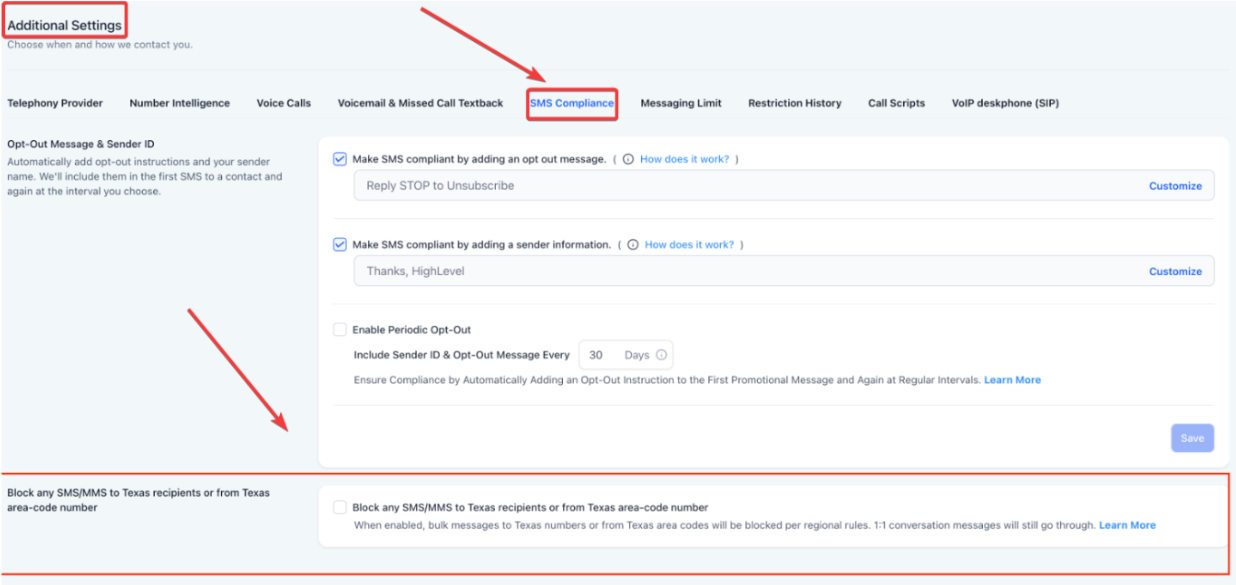
The Texas SMS Safeguard offers a one-toggle solution to automatically block marketing/promotional SMS/MMS sent to or from Texas numbers, helping align with regional messaging laws.
How to enable: Settings → Phone Numbers → Additional Settings → SMS Compliance → Texas SMS Safeguard
FAQs
Question: What is the Texas Mini-TCPA Law?
Answer: The law regulates telemarketing practices in Texas and now includes text messages, requiring businesses to register and follow specific rules.
Question: Who needs to comply with the law?
Answer: Any business sending marketing text messages to Texas residents or from Texas locations may need to register and comply.
Question: Are there exemptions?
Answer: Yes, some businesses, like publicly traded companies, certain financial institutions, and nonprofits may be exempt, but the burden of proof lies with the business.
Question: What happens if I don’t comply?
Answer: Non-compliance could result in fines, legal action, and increased lawsuit risks.
Question: How do I register?
Answer: You need to file a registration with the Texas Secretary of State and follow all disclosure and compliance requirements.
Question: Should I rely on exemptions without legal confirmation?
Answer: No. Exemptions are highly case-specific. You should consult with an attorney to confirm whether your business qualifies before assuming exemption.
Question: Can I just block all Texas area codes to be safe?
Answer: This is a common strategy, but be careful: many people keep their out-of-state phone numbers when they move to Texas. The most reliable way to stay compliant is to use the Texas SMS Safeguard toggle in your settings, which uses more advanced logic to identify and block residents.
Question: Does the $10,000 security deposit have to be paid in cash?
Answer: No. While it is a $10,000 requirement, you can satisfy it by posting a surety bond, an irrevocable letter of credit, or specific certificates of deposit. Many businesses use a surety bond, which typically requires a smaller annual premium rather than the full $10,000 upfront.
Question: What are the specific "Quiet Hours" for Texas residents?
Answer: Under the Texas Mini-TCPA, marketing messages are restricted more heavily than the federal standard. In Texas, you cannot send promotional texts before 9:00 AM or after 9:00 PM local time Monday through Saturday, and not before 12:00 PM on Sundays.